
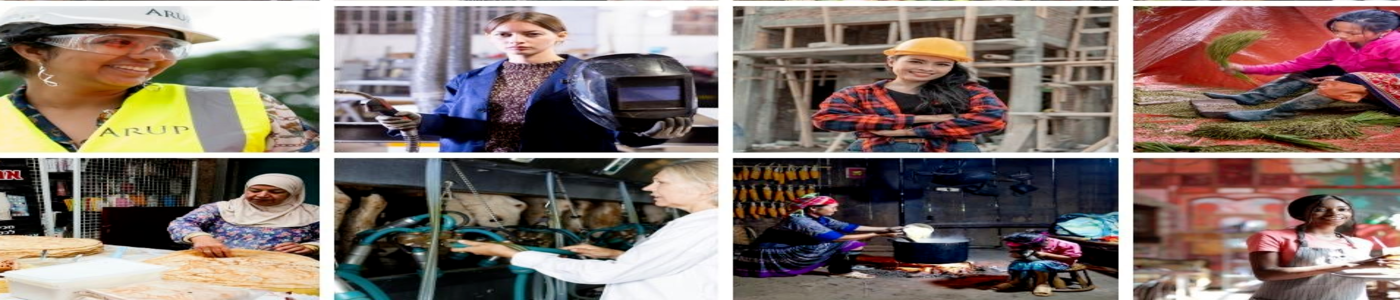
GENDER AND SOCIAL INCLUSION
UK: Growth Gateway Programme
The £50m Growth Gateway Programme aims to drive increased two-way trade and investment between the UK and Low- and Middle-income Countries (LMICs) and deliver significant benefits to both. The programme works directly and indirectly with the private sector to: provide digital guidance on export readiness, import regulations and financing options; deliver support to UK and LMIC firms to advance opportunities with positive development impact; and, deliver technical analysis to unlock sectoral and cross-cutting barriers and develop opportunity pipelines. As a supplier to the programme, Development Executives is relied on to provide specialized trade and investment as well as monitoring evaluation and learning related expertise to the programme. (FCDO, 2024 – 2025)
Indonesia: Kemitraan Indonesia Australia untuk Infrastruktur (KIAT)
The KIAT is a 10-year facility supported by the Australian Government and its overarching goal is to support ‘sustainable and inclusive economic growth through improved access to infrastructure for all people’. To support this goal, KIAT works with the Government of Indonesia (GoI) and other development partners to help achieve: improved GoI policy and regulatory framework for infrastructure development; high quality projects prepared and financed by GoI, the private sector and/or MDBs; high quality infrastructure delivery, management, and maintenance by GoI; and, infrastructure policies, design and delivery that are more inclusive for women and people with disabilities. As a Technical Assistance Panel member, Development Executives supports KIAT by providing a range of pre-qualified specialists to undertake technical assistance work on the project. (DFAT, 2024 – 2026)
Pakistan: Investment Promotion Activity (IPA)
The purpose of the IPA is to strengthen Pakistan’s business enabling environment to build greater credibility of Pakistani institutions and improve the ecosystem for foreign direct investment and increase U.S.-Pakistan bi-lateral trade and investment. As a subcontractor, to this five year program, Development Executives will work closely with governments (federal and provincial) and private sector stakeholders (e.g., businesses, associations, investors, etc.) to strengthen the investment climate for foreign investors in Pakistan and promote opportunities for enhanced trade and investment between U.S. and Pakistan businesses. (USAID, 2022 – 2026)
UK: DFID International Multi-Disciplinary Programme Framework Agreement (IMDP)
Development Executives is a supplier for IMDP Framework Agreement which provides DFID to access advice and expertise in a cost efficient and effective manner across 11 thematic areas. Development Executives will provide support across multiple IMDP lots which include: Conflict & Governance; Education; Infrastructure; Livelihoods; Social Development; and, Research. (DFID, 2019 – 2021)
UK: Investment Promotion Programme (IPP), Evaluation & Learning
Development Executives’ CEO served as the Programme Evaluation Lead for the IPP. The IPP was a £50 million programme which provided support across four work streams: capacity building of Investment Promotion Agencies; Investment Promotion campaigns and events; technical assistance to Public Private Partnership for investment projects; and, trade and investment integrity initiatives. Focus countries included Nigeria, South Africa, India, Pakistan and Philippines. (FCDO, 2018 – 2021)
UK: Global Finance Programme (GFP), Evaluation & Learning
Development Executives’ CEO served as the Programme Evaluation Lead for the GFP. The GFP was a GBP £68 million programme which provided support across four work streams: strengthening banking systems; deepening capital markets; mainstreaming equitable usage of financial technologies (digital finance); and, fostering an environment of financial stability. Focus countries for GFP included Bangladesh, Ghana, Kenya, Mozambique, Morocco, Nigeria, Pakistan, Sierra Leone, South Africa, Tanzania, Zambia, etc. (FCDO, 2018 – 2021)
Pakistan: Khyber Pakhtunkhwa Education Sector Programme (KESP) Performance and Process Evaluation
Development Executives is part of a consortia that has been retained by DFID to provide performance and process evaluation support to the Khyber Pakhtunkhwa Education Sector Program (KESP). The objective of this program is to assess the effectiveness of KESP and its contribution (financial and technical) to the final outcome (more children in school, staying longer and learning more). The project is also geared towards assessing whether specific strategies and approaches supporting outputs leading to outcomes have had (or are likely to have) the impact intended, as well as providing timely analysis around DFID’s contribution to the programme, as well as the role of technical assistance. (DFID, 2017 – 2021)
UK: DFID’s Global Evaluation Framework Agreement (GEFA)
Development Executives was a strategic partner supporting QED Group on the GEFA Framework Agreement. Under the GEFA framework, QED has won the opportunity to undertake a wide range of evaluations for DFID, globally. As one of QED’s key strategic local partners, Development Executives was called on to deliver technical and/or country/regional expertise for specific task orders or call-downs. (DFID, 2017 – 2019)
UK/Pakistan: Business Environment Reform Facility (BERF)
Development Executives was retained provide technical and advisory support for undertaking a research study for BERF focusing on identifying binding constraints and policy reform options for development of priority sectors in the Punjab province. The objectives of this research study were to: identify the binding constraints in the business environment to domestic investment and expansion in priority sectors (such as, agriculture, livestock, manufacturing and automotive sectors); assess potential of these sectors and implications of identified constraints in terms of economic growth, job creation, women’s economic empowerment, linkages with multinational firms and other spillovers to the local economy; and, provide policy reform recommendations. (DFID, 2016)
Pakistan: FATA Economic Stabilization Program (FESP)
FESP was a four-year, $50 million project to create jobs and improve economic opportunity in the Federally Administered Tribal Areas (FATA). The program was designed to help farmers to move beyond food insecure subsistence and support non-farm entrepreneurs, and do so in ways that: improve their livelihood; increase returns from investments in infrastructure that the US Government had made in FATA; and, contribute to further stabilization of FATA by building viable economic alternatives to militancy. The program was meant to serve as a bridge between short-term stabilization activities and longer-term more sustainable development. Development Executives was tasked with leading implementation of Component 2 of the program which focused on non-agricultural activities, such as: strengthening and establishing micro and small enterprises; strengthening supply chains between business operators in the tribal areas and those in the settled areas markets; rehabilitating market infrastructure; and, developing local business and trade associations. (USAID, 2014 – 2016)
Pakistan: Provincial Disaster Risk Management (DRM)
Development Executives’ core team member provided UNDP and the NWFP Government with planning support in the aftermath of the October 2005 earthquake. The Technical Assistance was geared towards enabling the government to establish sustainable mechanisms and structures for dealing with such disasters in future. The project involved: analyzing existing institutional framework for dealing with disasters; developing recommendations strengthening capacity of the government, including, creation of a Provincial Disaster Management Authority; and, developing a draft DRM plan for the Provincial Government. (UNDP/ Government of NWFP, 2007)
Afghanistan: Aga Khan Foundation (AKF), Afghanistan
Development Executives’ core team member worked with AKF as a Regional Programme Manager in Afghanistan. AKF was one of Afghanistan’s biggest NGO that was implementing an integrated rural development programme in close collaboration with the government and the communities. The Regional Programme Manager was responsible for implementing a multidisciplinary programme that focused on community development, infrastructure development, natural resource management, rural education and enterprise development. (AKF Afghanistan, 2005 – 2007)
Pakistan: Gender Reform Action Plan (GRAP)
Development Executives’ core team member was retained by Asian Development Bank to provide Technical Assistance to the Government of NWFP in order to assist in developing a Gender Reform Action Plan (GRAP). As the Institutional Reforms Specialist, he: identified policy and institutional gaps; provided recommendations that encouraged mainstreaming of gender issues in public policy; and, developed policy analysis and planning support which enabled the government to effectively design, approve, implement, and monitor its GRAP. (Asian Development Bank, 2002 – 2003)
Pakistan: Khushhali Bank (KB)
Development Executives’ core team member served as the Regional General Manager worked the largest micro finance institution (MFI) in Pakistan as which has been established with the support Government of Pakistan and Asian Development Bank. Its main objective is poverty alleviation through social mobilization. As the Regional General Manager I : (i) supervised the regional staff of professionals as well as developed regional and Field Unit teams (ii) designed and developed regional plans that effectively financed income-generating initiatives and provided saving facilities that encouraged capital formation (iii) developed and implemented the operational plan (action plans and annual work plans). (iv) implemented management information systems to effectively plan, monitor, and audit resource allocation. (Government of Pakistan, 2001 – 2002)
